The Dark Side of Hardware Upgrade Forum

...bringing out the worst in you since 2003...
Oggi è mar ott 13, 2026 11:49 am

Tutti gli orari sono UTC +1 ora


-->
-->

Apri un nuovo argomento Rispondi all’argomento  [ 8 messaggi ] 
Autore Messaggio
 Oggetto del messaggio: Wannabe tecnico - Domande e risposte.
MessaggioInviato: lun nov 22, 2010 7:56 am 
Schiavo
Avatar utente
Iscritto il: mer lug 14, 2010 5:55 pm
Messaggi: 24969
Per pulizia facciamo qui le nostre domande e diamo qui le nostre domande (si faccia una domanda, si dia una risposa e vada...).

Qui metteremo (in sintesi) le varie domande e le rispettive risposte per i vari thread "wannabe tecnico".
Voi postate "a seguito" domande e risposte, io edito questo thread per mantenere i punti salienti in questo post.
_________________
Immagine Wannabe tecnico : Le pipeline | Registri, cache ed altre amenità | DMA, multitasking, interrupt e CPU "OS friendly" (work in progress) Immagine
Top
 Profilo Non connesso  
 
 Oggetto del messaggio: Re: Wannabe tecnico - DMA, multitasking, interrupt e CPU "OS friendly"
MessaggioInviato: ven dic 10, 2010 3:32 pm 
Schiavo
Avatar utente
Iscritto il: mar ott 02, 2007 9:13 am
Messaggi: 2313
ma l'uso di pae per gestire + di 4 gb di ram su sitemi 32bit è possibile? si può "installare" delle pae migliori per superare questo limite?

con linux a 32bit com'è la situazione?

avrei molto piacere a leggere un'articoletto su cosa sono e come si usano le librerie MPI e openMPI

grassie
_________________
Immagine
Top
 Profilo Non connesso  
 
 Oggetto del messaggio: Re: Wannabe tecnico - DMA, multitasking, interrupt e CPU "OS friendly"
MessaggioInviato: ven dic 10, 2010 3:59 pm 
Schiavo
Avatar utente
Iscritto il: mer lug 14, 2010 5:55 pm
Messaggi: 24969
Il PAE è abilitato di default su XP SP3 ed OS successivi... c'è proprio lo switch /PAE nel boot.ini.
La ragione è facile a capirsi... NX è disponibile solo in modalità PAE, per cui se vuoi usare l'NX devi per forza di cose usare un modo PAE (a 32 o 64 bit).

Il punto è che gli OS desktop a 32 bit di MS (a differenza di quelli server) hanno impostato forzatamente il limite a 4GB anche con PAE.

Sotto Linux c'è l'apposita voce del kernel... cito da menuconfig:

Codice:
CONFIG_NOHIGHMEM:

Linux can use up to 64 Gigabytes of physical memory on x86 systems.
However, the address space of 32-bit x86 processors is only 4
Gigabytes large. That means that, if you have a large amount of
physical memory, not all of it can be "permanently mapped" by the
kernel. The physical memory that's not permanently mapped is called
"high memory".

If you are compiling a kernel which will never run on a machine with
more than 1 Gigabyte total physical RAM, answer "off" here (default
choice and suitable for most users). This will result in a "3GB/1GB"
split: 3GB are mapped so that each process sees a 3GB virtual memory
space and the remaining part of the 4GB virtual memory space is used
by the kernel to permanently map as much physical memory as
possible.

If the machine has between 1 and 4 Gigabytes physical RAM, then
answer "4GB" here.

If more than 4 Gigabytes is used then answer "64GB" here. This
selection turns Intel PAE (Physical Address Extension) mode on.
PAE implements 3-level paging on IA32 processors. PAE is fully
supported by Linux, PAE mode is implemented on all recent Intel
processors (Pentium Pro and better). NOTE: If you say "64GB" here,
then the kernel will not boot on CPUs that don't support PAE!
The actual amount of total physical memory will either be
auto detected or can be forced by using a kernel command line option
such as "mem=256M". (Try "man bootparam" or see the documentation of
your boot loader (lilo or loadlin) about how to pass options to the
kernel at boot time.)

If unsure, say "off".


Quindi sotto linux per gestire fino a 64GB di RAM anche a 32 bit basta averci il kernel col supporto compilato.

Ci sono comunque gruppi che hanno realizzato patch per togliere il lock PAE da Vista/Seven, tipo questi : http://www.unawave.de/windows-7-tipps/3 ... ml?lang=EN
Io però non li ho provati.
_________________
Immagine Wannabe tecnico : Le pipeline | Registri, cache ed altre amenità | DMA, multitasking, interrupt e CPU "OS friendly" (work in progress) Immagine
Top
 Profilo Non connesso  
 
 Oggetto del messaggio: Re: Wannabe tecnico - DMA, multitasking, interrupt e CPU "OS friendly"
MessaggioInviato: ven dic 10, 2010 4:11 pm 
Schiavo
Avatar utente
Iscritto il: mar ott 02, 2007 9:13 am
Messaggi: 2313
ConteZero ? ha scritto:
Il PAE è abilitato di default su XP SP3 ed OS successivi... c'è proprio lo switch /PAE nel boot.ini.
La ragione è facile a capirsi... NX è disponibile solo in modalità PAE, per cui se vuoi usare l'NX devi per forza di cose usare un modo PAE (a 32 o 64 bit).

Il punto è che gli OS desktop a 32 bit di MS (a differenza di quelli server) hanno impostato forzatamente il limite a 4GB anche con PAE.

Sotto Linux c'è l'apposita voce del kernel... cito da menuconfig:

Codice:
CONFIG_NOHIGHMEM:

Linux can use up to 64 Gigabytes of physical memory on x86 systems.
However, the address space of 32-bit x86 processors is only 4
Gigabytes large. That means that, if you have a large amount of
physical memory, not all of it can be "permanently mapped" by the
kernel. The physical memory that's not permanently mapped is called
"high memory".

If you are compiling a kernel which will never run on a machine with
more than 1 Gigabyte total physical RAM, answer "off" here (default
choice and suitable for most users). This will result in a "3GB/1GB"
split: 3GB are mapped so that each process sees a 3GB virtual memory
space and the remaining part of the 4GB virtual memory space is used
by the kernel to permanently map as much physical memory as
possible.

If the machine has between 1 and 4 Gigabytes physical RAM, then
answer "4GB" here.

If more than 4 Gigabytes is used then answer "64GB" here. This
selection turns Intel PAE (Physical Address Extension) mode on.
PAE implements 3-level paging on IA32 processors. PAE is fully
supported by Linux, PAE mode is implemented on all recent Intel
processors (Pentium Pro and better). NOTE: If you say "64GB" here,
then the kernel will not boot on CPUs that don't support PAE!
The actual amount of total physical memory will either be
auto detected or can be forced by using a kernel command line option
such as "mem=256M". (Try "man bootparam" or see the documentation of
your boot loader (lilo or loadlin) about how to pass options to the
kernel at boot time.)

If unsure, say "off".


Quindi sotto linux per gestire fino a 64GB di RAM anche a 32 bit basta averci il kernel col supporto compilato.

Ci sono comunque gruppi che hanno realizzato patch per togliere il lock PAE da Vista/Seven, tipo questi : http://www.unawave.de/windows-7-tipps/3 ... ml?lang=EN
Io però non li ho provati.


'pito grassie. era piu che altro una curiosità, visto che ormai ho tutto a 64 (xp, 7 e ubuntu)

per le mpi invece che ci racconti di bello?
_________________
Immagine
Top
 Profilo Non connesso  
 
 Oggetto del messaggio: Re: Wannabe tecnico - DMA, multitasking, interrupt e CPU "OS friendly"
MessaggioInviato: ven dic 10, 2010 4:15 pm 
Schiavo
Avatar utente
Iscritto il: mer lug 14, 2010 5:55 pm
Messaggi: 24969
D1o ? ha scritto:
ConteZero ? ha scritto:
Il PAE è abilitato di default su XP SP3 ed OS successivi... c'è proprio lo switch /PAE nel boot.ini.
La ragione è facile a capirsi... NX è disponibile solo in modalità PAE, per cui se vuoi usare l'NX devi per forza di cose usare un modo PAE (a 32 o 64 bit).

Il punto è che gli OS desktop a 32 bit di MS (a differenza di quelli server) hanno impostato forzatamente il limite a 4GB anche con PAE.

Sotto Linux c'è l'apposita voce del kernel... cito da menuconfig:

Codice:
CONFIG_NOHIGHMEM:

Linux can use up to 64 Gigabytes of physical memory on x86 systems.
However, the address space of 32-bit x86 processors is only 4
Gigabytes large. That means that, if you have a large amount of
physical memory, not all of it can be "permanently mapped" by the
kernel. The physical memory that's not permanently mapped is called
"high memory".

If you are compiling a kernel which will never run on a machine with
more than 1 Gigabyte total physical RAM, answer "off" here (default
choice and suitable for most users). This will result in a "3GB/1GB"
split: 3GB are mapped so that each process sees a 3GB virtual memory
space and the remaining part of the 4GB virtual memory space is used
by the kernel to permanently map as much physical memory as
possible.

If the machine has between 1 and 4 Gigabytes physical RAM, then
answer "4GB" here.

If more than 4 Gigabytes is used then answer "64GB" here. This
selection turns Intel PAE (Physical Address Extension) mode on.
PAE implements 3-level paging on IA32 processors. PAE is fully
supported by Linux, PAE mode is implemented on all recent Intel
processors (Pentium Pro and better). NOTE: If you say "64GB" here,
then the kernel will not boot on CPUs that don't support PAE!
The actual amount of total physical memory will either be
auto detected or can be forced by using a kernel command line option
such as "mem=256M". (Try "man bootparam" or see the documentation of
your boot loader (lilo or loadlin) about how to pass options to the
kernel at boot time.)

If unsure, say "off".


Quindi sotto linux per gestire fino a 64GB di RAM anche a 32 bit basta averci il kernel col supporto compilato.

Ci sono comunque gruppi che hanno realizzato patch per togliere il lock PAE da Vista/Seven, tipo questi : http://www.unawave.de/windows-7-tipps/3 ... ml?lang=EN
Io però non li ho provati.


'pito grassie. era piu che altro una curiosità, visto che ormai ho tutto a 64 (xp, 7 e ubuntu)

per le mpi invece che ci racconti di bello?


Non ne ho esperienza.
Comunque c'è il thread domande e risposte per queste cose (giusto per evitare di "sporcare"), ora chiedo al mod di spostare là questa "discussione".

Anyway per giocare (dici pio) è utile averci un OS a 32 bit, perché "via 64 bit" un pochino il sistema "soffre" ad eseguire codice non 64 bit.
_________________
Immagine Wannabe tecnico : Le pipeline | Registri, cache ed altre amenità | DMA, multitasking, interrupt e CPU "OS friendly" (work in progress) Immagine
Top
 Profilo Non connesso  
 
 Oggetto del messaggio: Re: Wannabe tecnico - DMA, multitasking, interrupt e CPU "OS friendly"
MessaggioInviato: ven dic 10, 2010 5:43 pm 
Schiavo
Avatar utente
Iscritto il: sab lug 17, 2010 11:22 am
Messaggi: 3498
Località: London SE1
D1o ? ha scritto:
ma l'uso di pae per gestire + di 4 gb di ram su sitemi 32bit è possibile? si può "installare" delle pae migliori per superare questo limite?


Certo che e' possibile, ad esempio Windows2000 Server (32bit c'era solo quello), Windows 2003 Server 32bit e Windows 2008 Server 32 bit permettono l'accesso fino a 64GB di memoria, a seconda delle versioni.
Addirittura 128GB, con 2 processori e qualche trucchetto (certificato, non da hacker)
Il PAE e' un bit che viene abilitato o meno. O c'e' o non c'e'. Non ce n'e' di migliori o peggiori.
_________________
In regime di libera concorrenza esiste una sola regola per l'imprenditore: fare il miglior prodotto possibile al minor costo possibile, pagando i massimi stipendi possibili. (Henry Ford)
Top
 Profilo E-mail Non connesso  
 
 Oggetto del messaggio: Re: Wannabe tecnico - Domande e risposte.
MessaggioInviato: ven dic 10, 2010 5:58 pm 
Schiavo
Avatar utente
Iscritto il: mer lug 14, 2010 5:55 pm
Messaggi: 24969
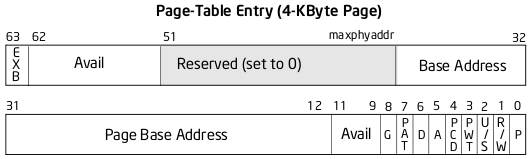
In pratica in PAE ogni entry di pagina anziché usare 32 bit ne usa 64:

Entry di pagina "non PAE":
Immagine

Entry di pagina "PAE":
Immagine

Nei 32 bit "extra" in cima c'è l'NX (per cui se vuoi NX/DEP devi per forza usare PAE) ed "in basso" ci sono i bit addizionali per indirizzare spazi > 4GB fisici.

Nota che i primi 32 bit sono identici in entrambi i modi.
_________________
Immagine Wannabe tecnico : Le pipeline | Registri, cache ed altre amenità | DMA, multitasking, interrupt e CPU "OS friendly" (work in progress) Immagine
Top
 Profilo Non connesso  
 
 Oggetto del messaggio: Re: Wannabe tecnico - Domande e risposte.
MessaggioInviato: ven dic 10, 2010 6:06 pm 
Schiavo
Avatar utente
Iscritto il: mer lug 14, 2010 5:55 pm
Messaggi: 24969
Dall'immagine si vede bene... il "vecchio" entry (quello da 32 bit) aveva solo 20 bit per l'indirizzo.

...essendo le pagine 4K (2^12) vien fuori che le celle indirizzabili dal vecchio entry erano 2^20 x 2^12 = 2^32 aka 4GB.

Il "nuovo" entry invece usa bit extra per cui l'entry può indirizzare molta più memoria fisica.
_________________
Immagine Wannabe tecnico : Le pipeline | Registri, cache ed altre amenità | DMA, multitasking, interrupt e CPU "OS friendly" (work in progress) Immagine
Top
 Profilo Non connesso  
 
Visualizza ultimi messaggi:  Ordina per  
Apri un nuovo argomento Rispondi all’argomento  [ 8 messaggi ] 
-->

Tutti gli orari sono UTC +1 ora


Chi c’è in linea

Visitano il forum: Nessuno e 0 ospiti


Non puoi aprire nuovi argomenti
Non puoi rispondere negli argomenti
Non puoi modificare i tuoi messaggi
Non puoi cancellare i tuoi messaggi
Non puoi inviare allegati

Vai a:  
cron
Powered by phpBB © 2000, 2002, 2005, 2007 phpBB Group
Traduzione Italiana phpBB.it